

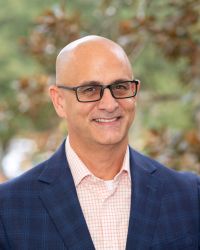
For years, people have asked why Oak Hammock at the University of Florida is so successful and why both residents and team members consistently express a high level of satisfaction. They ask how a senior living community attracts employees who genuinely care and why employees demonstrate such dedication that they willingly step in on their days off when the community needs them.
After more than 30 years in the senior living industry, I believe the answer is straightforward: exceptional communities are built by a team that places employees at the center of their strategy.
This philosophy aligns with a principle often attributed to Sir Richard Branson: “When leaders take care of employees, employees take care of clients.” At Oak Hammock, this belief is not aspirational, it is operational.
Leadership Without Distance
As President and CEO of a “Life Plan” community now in its 22nd year, I have learned that proximity matters. I am accountable to our board of directors and to the residents we serve, yet we are not constrained by distant corporate mandates. Our decisions are made locally, informed by those closest to the work and aligned with the values of our community.
That autonomy has allowed us to make intentional choices that support employee engagement, trust and long-term performance, qualities that can be harder to preserve as organizations grow and become more complex.
Why the Industry Faces Ongoing Challenges—and Opportunities for Improvement
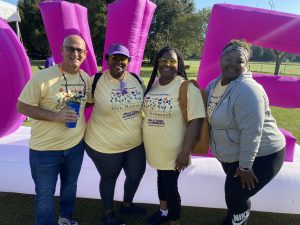
Over the past three decades in senior living leadership, I have observed several recurring dynamics that can limit organizational performance and long-term success:
- Ownership and operating models that, at times, place greater emphasis on near-term results than on sustained cultural investment.
- Leadership approaches that may unintentionally underemphasize the strategic value of employees as drivers of outcomes.
- Organizational structures that can reduce local decision-making authority as systems grow in scale. People thrive when they have autonomy.
- A gap that can emerge between stated engagement goals and the everyday experience of team members and residents.
When engagement erodes, turnover follows. And when turnover becomes the norm, communities lose institutional knowledge, consistency of care and trust, none of which can be quickly replaced.
From Resident-Centric to People-First Leadership
Senior living has long described itself as resident centric, a valuable and essential commitment. But lasting excellence also calls for expanding that focus to a broader people-first approach, one that recognizes team members as the driving force behind the resident experience every day.
When team members feel valued, fairly compensated and supported, engagement increases, performance improves and retention stabilizes. Research consistently demonstrates that reduced turnover not only lowers costs but preserves knowledge, strengthens relationships and improves outcomes.
Culture is not built through slogans. It is built through daily leadership behaviors such as how decisions are made, how people are treated and whether values are consistently modeled.
The Role of Vision and Strategic Patience
High-performing senior housing communities operate with a clear service vision and the discipline to sustain it over time. Vision creates direction; consistency creates trust.
In periods of market disruption, labor shortages or technological change, a well-trained and engaged workforce is more adaptable and resilient. Strategic planning must therefore be long-term, flexible and collaborative-developed with input from boards, residents and leadership teams to ensure shared ownership and alignment.
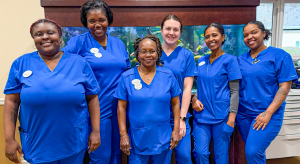
Leadership as a Moral Obligation
Leadership is not simply a position; it is a responsibility. Ethical leadership, transparency and engagement signal to team members that they matter beyond productivity. Stability at the leadership level preserves momentum, while frequent turnover at the top erodes trust and performance.
As Mark Twain observed, “To do right is wonderful. To teach others to do right is even more wonderful—and much easier.” Effective leadership style is best accomplished by setting the tone not by what the industry leaders say, but by what they consistently do to create the best team member experience. In turn, the people-first culture will improve the overall retirement community environment.
Belonging Is a Performance Strategy
Modern leadership research reinforces what experience has long shown: belonging drives performance. The NeuroLeadership Institute’s SCARF model highlights five social drivers—status, certainty, autonomy, relatedness and fairness—that directly influence engagement and behavior.
Leaders who intentionally foster trust, consistency and connection reduce perceived threats and create environments where people can perform at their best. I continue to learn and remind myself that this is a daily discipline, not a destination.
This begins with simple but powerful practices: listening without distraction, showing genuine curiosity, recognizing contributions and making people feel seen. As author John Maxwell emphasizes in “The 5 Levels of Leadership”, the highest level of leadership is reached when people follow you because of who you are and what you represent—and I would be the first to say that I am still on that journey, striving to grow, improve and lead more intentionally every day rather than claiming to have “arrived.”
Oak Hammock Improvements for Employee Morale

At Oak Hammock, employee morale is not treated as a secondary outcome, it is a strategic priority directly tied to service quality, resident experience and long-term organizational performance. Over the past several years, we have made deliberate investments and cultural choices to reinforce trust, belonging and shared purpose across the organization.
- Meaningful investment in employee financial well-being. Last year, Oak Hammock contributed $361,000 toward matching employee 401(k) contributions — a 129% increase compared to just four years earlier. This reflects both a significantly stronger employer match and a focused effort to encourage broader team member participation. During the same period, Oak Hammock also absorbed more than $1 million in additional benefit expenses. These decisions underscore a clear commitment to supporting employees’ financial security, recognizing it as foundational to engagement, retention and peace of mind.
- Intentional independence and local accountability. We continue to operate as a single-site, self-sustaining organization. This structure allows decisions to be made close to the work, encourages innovation and creates space for creative ideas to take root and be acted upon, without unnecessary layers or distance from the people we serve.
- A clearly defined service culture. We formalized our core service vision— “Compassionate Professionals, Inspired Service”—to provide a shared standard for how we show up for residents, families and one another. This vision serves as a daily guidepost, not a slogan.
- Recognition that reinforces values. Through our WeCare commitment to excellent service, we actively recognize team members across six service behaviors: welcoming, exceptional, courteous, attentive, responsive and empathetic. Since placing intentional focus on recognition, nominations have increased by 657% year over year, signaling not only engagement, but a culture where people notice and celebrate each other’s contributions. We also increased investment in employee engagement initiatives.
- Support when it matters most. The Helping Hands fund was established to provide confidential financial assistance to team members experiencing unexpected hardship. This program reinforces that Oak Hammock is not just a workplace, but a community that stands behind its people during difficult moments.
- A simple but powerful philosophy. We embrace the belief often attributed to Disney theme parks: “Treat employees like they make a difference—and they will.” That mindset influences how we invest, how we listen and how we lead.
- Enhanced focus on orientation and onboarding for new team members and expanded and formalized annual training for all staff.
- Strengthened follow-up and feedback mechanisms through the WeCare Connect system to provide an additional avenue for addressing team member concerns.
Collectively, these efforts reflect a broader commitment to creating an environment where team members feel valued, supported and connected, because when people feel they belong, performance follows.

A Call to the Industry
The senior living industry faces a critical inflection point. Many of its most experienced leaders will retire in the next five to six years, while demand for housing and care continues to grow at an unprecedented pace, as the baby boomer population ages. The question is not whether we can build more units—but whether we can build cultures capable of sustaining excellence.
In addition, many prospective residents are seeking a living experience that emphasizes hospitality, comfort and service in ways that feel familiar and welcoming.
Communities that invest in their people, empower local leadership and lead with purpose will not only outperform, but they will also endure.
As Mother Teresa wisely said, “Kind words can be short and easy to speak, but their echoes are endless.” In senior living, those echoes are felt every day; in the lives of team members, residents and the communities we serve.