
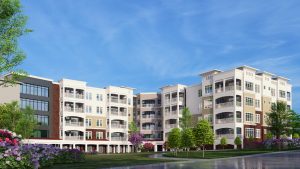
As initially reported in February 2025, Oak Hammock at the University of Florida is adding to its current 136-acre campus a new, LEED-certified, residential apartment building called The Canopy, which will include 56 new apartments. Construction began in August 2025 and is scheduled for completion in the spring of 2027.
This development underscores Oak Hammock’s commitment to providing a sustainable, high-quality living environment that reflects the community’s core values and meets the evolving needs of its residents.
LEED certification isn’t just an environmental commitment—it’s a strategic investment. It reduces operational costs, enhances resident well-being and strengthens Oak Hammock’s competitive position in the senior living market.
For this new residential project and current community renovation, Oak Hammock has amassed experts in the areas of senior living, including architects, engineers, general contractors, landscape architects, interior designers, acousticians and LEED experts, to name a few.
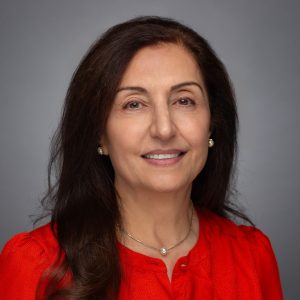
At the helm of the sustainability effort is Bahar Armaghani, LEED Fellow, WELL Faculty, a nationally recognized leader in LEED and WELL Building Standards. Armaghani is an instructional associate professor at the University of Florida and served for seven years as the director of the UF Sustainability and the Built Environment Program, and she currently leads the Green Building Learning Collaborative, a bridge between academia and industry.
In 2023, Armaghani received the U.S. Green Building Council, or USGBC’s, Kate Hurst Leadership Award. She launched UF’s Green Building Program and served as director for over a decade, administering more than 135 LEED-certified projects, including 13 Platinum-level buildings. Her work includes the first LEED Platinum building in Florida.
Notable buildings at UF which are LEED certified include: Heavener Football Complex, Graham Center at Pugh Hall, Stephen C. O’Connell Center renovation and addition, Reitz Union expansion and renovation and the Malachowsky Hall for Data Science and Information Technology.
Why is LEED certification important in senior living facilities?
LEED, which stands for Leadership in Energy and Environmental Design, is the most widely used green building certification system in the world. It ensures a building is designed and constructed to optimize energy use, reduce environmental impact and enhance occupant health.
LEED certification provides numerous benefits to building, including environmental, health and wellness, economic and community. The following is a list of benefits broken down into categories:
- Environmental:
- Reduced carbon footprint through energy efficiency.
- Conservation of water and natural resources.
- Use of environmentally responsible materials.
- Health and Wellness for Occupants:
- Improved indoor air quality through better ventilation, filtration, and non-toxic materials.
- Access to daylight and outdoor views, which enhance mental and physical well-being.
- Economic Advantages:
- Reduced energy and water bills.
- Increased property value and market appeal.
- Community & Market Impact:
- Signals a commitment to sustainability.
- Attracts eco-conscious residents and families.
- LEED certification is a mark of excellence, showcasing communities as leaders in sustainable senior living.
 What makes a building green and sustainable?
LEED certification is the earned recognition conveyed by an independent, third-party certifier on behalf of the USBCG, a nonprofit organization founded in 1993, which certifies every three years that a building is green.
LEED certification addresses everything from energy and water use to materials selection, managing waste and indoor environmental quality through a series of credit categories tailored for each rating system.
The three major elements of LEED certification are:
- Decarbonization – Reducing carbon emissions through energy-efficient design and clean energy use.
- Indoor Environmental Quality – Enhancing occupant health with better air, light and materials.
- Resource Efficiency – Conserving water, energy and materials to reduce environmental impact.
What is the highest level of LEED certification?
To achieve LEED certification, a project must first complete all prerequisites and then earn points by selecting and satisfying credit requirements. Projects go through a verification and review process and are awarded points that correspond to a level of LEED certification, which are Platinum, Gold, Silver and Certified.
The Canopy at Oak Hammock is on track to achieve LEED Silver under the most current and stringent version—LEED v4.0/v4.1. According to Armaghani, only three other continuing care retirement communities in Florida have earned LEED certification that is publicly listed, all under earlier and less rigorous versions. Oak Hammock’s project will be the first in the state certified under the latest version, setting a new benchmark for sustainable senior living.
 What is a LEED certified building and how do you save energy?
LEED is the most widely recognized green building rating system in the world and offers a framework for healthy, efficient and cost-effective green buildings, promoting human and environmental health. It serves as a globally recognized symbol of sustainability leadership, supported by a committed community of organizations and individuals driving market transformation.
The trend for construction of green buildings is moving up. Since its establishment in 1998, the entire world has seen a major uptick in the number of sustainable buildings constructed. The issues which appear to matter most to people are health and well-being, the economy and stewardship of the environment. In addition, economically green buildings are better for the residents and staff in a senior living community, and numerous data backs up the facts.
LEED certified buildings decrease the use of natural resources, air and water quality and reduce waste. In particular:
- CO2 emission is reduced directly associated with energy savings.
- Decrease consumption from fossil fuels.
- New buildings are now designed to be solar ready as roof space is limited.
- Steel is now 100% recyclable; buildings have greater life exportability.
- Buildings are designed to be deconstructed so materials can be reused.
- Paint no longer has volatile organic compound, or VOC, so buildings are safer, and people are not as affected by odors.
- All equipment must be “energy star certified”; water fixtures must have “water sense” for to minimize water consumption.
- Having more glass in the building increases sustainability, daylight, views, which is also a big part of acoustics.
- LEED certified buildings add to recruitment, production and positivity, which also increases psychological feelings of happiness for residents and staff.
 How can LEED certification help a community save money?
When LEED buildings are initially constructed or retrofitted, a baseline is established to determine the exact usage of energy, water and waste. After a year of occupancy, the building is reevaluated to determine the usage. That’s when the cost savings impact is measured. Over time, energy and water efficiencies translate into significant savings, which can be reinvested into programs and amenities for residents.
The cost savings of LEED certified buildings can be significant, with an estimated 30-40% for energy and the return on investment, or ROI, is greater than 30% minimum dedicated maintenance, or maintaining the building. In addition, they save an estimated 40% in water, including wastewater. Additionally, LEED buildings are planned to keep wastewater out of aquafers.
There has been a market transformation for building materials in new construction, and the construction industry changed supply and demand. Building codes have evolved and are more stringent. One example is many utilities companies no longer give incentives and rebates.
New buildings are designed for a 50-year-lifecycle. Now, during the construction phase, using materials which can be recycled rather than dumped into landfills can save on renewable energy, future construction costs and negative impact on the environment. Senior living facilities such as Oak Hammock can prepare for future development projects by ensuring current buildings are LEED certified.
How do LEED certified buildings benefit residents in senior living facilities?
There are numerous reasons why seniors choose to live in a life plan community or continuing care retirement community such as Oak Hammock. Many move to connect with other older adults and develop relationships so they can age in place.
Oak Hammock has evolved the “continuing care retirement community” concept into a forward-thinking, advanced approach for the older adult lifestyle – creating an environment for lifelong learning, optimum health and fitness, creativity and personal growth.
In addition, the following is a list of benefits to consider living in a LEED certified community:
- Comfort and Safety:
- Better temperature control and indoor air quality ensure a more comfortable living environment.
- Healthier materials minimize exposure to allergens and toxins.
- Enhanced Quality of Life:
- Integration of outdoor spaces and natural elements promotes physical activity and mental wellness.
- Quiet, energy-efficient systems reduce noise, enhancing peace and tranquility.
- Alignment with Values:
- Many senior living communities prioritize creating an environmentally responsible and community-centered environment—LEED aligns with these values.

Oak Hammock is entering a pivotal period of growth and transformation—an ideal moment to take a refreshed, forward-looking approach. With a renewed commitment to holistic community wellness—both internal and external—the community is aligning its programming with the seven dimensions of wellness, while also investing in sustainable infrastructure. This dual focus allows the community to support its members’ well-being in every sense: emotional, intellectual, physical, social, spiritual, vocational and environmental.
As the broader senior living industry evolves, these integrated wellness strategies may offer a meaningful blueprint for others. Now is the time for communities to adapt and grow alongside the people they serve.